red teaming plays a vital role in modern cybersecurity by simulating real attacker behavior in a controlled environment to evaluate how well an organization can defend itself. Unlike traditional security assessments that focus on isolated weaknesses, it examines the full attack lifecycle, including detection, response, and recovery. By mimicking advanced threat actor strategies and objectives, organizations gain realistic insights into their resilience and readiness against complex, multi-stage cyberattacks in today’s evolving digital threat landscape globally.
Improved visibility into hidden security gaps
One of the major advantages of red teaming is the ability to uncover security weaknesses that remain invisible during routine vulnerability scans or standard testing methods. These exercises replicate real-world attack paths, showing how small misconfigurations or overlooked access points can be chained together. This approach provides security teams with a clearer understanding of how attackers could move through systems undetected, helping organizations strengthen blind spots and improve monitoring coverage across critical infrastructure environments effectively and continuously.
Strengthening detection and response capabilities
A key benefit of red teaming is the direct improvement it brings to detection and incident response processes. By simulating stealthy intrusions that mirror real adversary behavior, security operations centers are tested under realistic pressure. Teams must identify, analyze, and respond to threats as they unfold, revealing delays or inefficiencies in workflows. This hands-on experience helps organizations refine alerting systems, enhance response speed, and improve coordination between technical and operational security teams in real time scenarios.
Realistic adversary behavior simulation
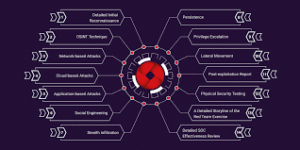
Unlike conventional assessments, red teaming focuses on replicating genuine attacker techniques, tactics, and procedures used in real-world cyber campaigns. This includes reconnaissance, phishing, credential abuse, and lateral movement across systems to achieve specific objectives. The goal is not just to find vulnerabilities but to demonstrate how an attacker could realistically operate within a network. Providers like Swarmnetics help organizations run these simulations using experienced professionals who emulate modern threat actors with high accuracy.
Enhanced risk management and decision-making
Another advantage of red teaming is its contribution to stronger risk management and strategic decision-making. By showing how an actual breach could unfold, organizations gain a clearer understanding of potential business impact. This helps leadership prioritize security investments based on real exposure rather than theoretical risks. It also supports better planning for incident response, disaster recovery, and long-term cybersecurity strategy, ensuring that protection measures align more closely with evolving threat environments and operational priorities effectively.
Building a stronger security culture
Security awareness across employees and teams is significantly improved through red teaming exercises, as they often include social engineering and phishing simulations. These scenarios demonstrate how human behavior can become a critical entry point for attackers. By exposing these vulnerabilities, organizations can design more effective training programs and encourage a stronger security-first mindset. Over time, this leads to better vigilance, improved reporting of suspicious activity, and reduced likelihood of successful human-targeted attacks within enterprises.
Validation of security investments and controls
Organizations invest heavily in security tools, but their effectiveness is often assumed rather than proven. red teaming provides real-world validation of whether these technologies actually work under attack conditions. It tests firewalls, intrusion detection systems, endpoint protection, and security workflows in an integrated manner. This ensures that investments deliver real value and are not just theoretical safeguards. The findings help refine architecture and confirm whether security controls align with actual threat scenarios faced by organizations.
Long-term resilience and continuous improvement
Ultimately, red teaming helps organizations build long-term cyber resilience by continuously challenging and improving their defenses. It shifts security from a reactive model to a proactive and adaptive strategy. Insights gained from each engagement support ongoing improvements in detection, response, and prevention capabilities. This iterative process ensures that organizations stay ahead of evolving threats, strengthening their ability to withstand sophisticated attacks and maintain operational continuity in an increasingly complex digital environment.