soldering utilized in Flexible printed circuit board
Using soldering, flexible printed circuit board are joined together to allow the circuits to flex. This makes the boards more useful for a wide range of applications. This process is called flex soldering and requires special techniques to avoid defects. It also involves different material handling than rigid PCBs.
A flex circuit is constructed of thin insulating and conductor layers. They are bonded to each other with an adhesive system that is softer and less cohesive than the epoxy used for most rigid PCBs. The adhesive system is designed to allow the flex circuits to bend and twist without damaging the conductors or the adhesive system. During the manufacturing process, a flex circuit undergoes rigorous testing to ensure that it can withstand repeated bending and twisting. The testing includes flex cycle endurance, dynamic bend tests, torsion and twist tests, adhesive bond strength, and flammability rating.
The materials used to make a flexible printed circuit board include copper, insulators, and the circuitry layer. The insulators are made from dielectric films, typically polyimide and polyester. Conductors are usually made from copper or aluminum. Insulators are important because they separate electrical conductors from each other and prevent current from flowing through them. They also provide structural support.
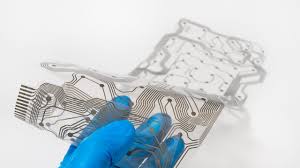
How is soldering utilized in Flexible printed circuit board?
In order to make a flex circuit, the layers of the circuit are first placed on a thin glass fiber or a flexible epoxy substrate. Then, the insulators and conductors are bonded with an epoxy or acrylic adhesive. A flexible PCB can be made from a variety of different materials, including polyimide, phenolic, glass-fiber, or polyester-imide. Depending on the application, the flex circuit may also need an adhesive-less construction.
For flex soldering, the most important consideration is the heat required to reflow the solder. The temperature profile used for rigid PCBs is too high for flex circuits and could lead to blistering or delamination. During the flex circuit soldering process, it is crucial to use a low-residue flux and to apply a no-clean solder paste. It is also necessary to pre-solder all the pins on the IC chip. This step will help to avoid the formation of solder bridges, which can be difficult to remove.
It is also necessary to use a small soldering iron for the flex circuits. This will minimize the amount of solder used and reduce the overall height of the flex circuit. In addition, it is advisable to shorten the traces between high-frequency components to avoid interference with other components. This will also reduce the impedance and noise resistance of the flex circuit. Finally, it is important to place the IC chip on the flex circuit in the correct position before soldering. After soldering, the chip should be inspected and repositioned if needed. It is also a good idea to use clamps to hold the flex circuit in place while it is being soldered.